
Solon's thoughts on democracy

I live in an area of the UK which has just hosted a by-election for our local member of parliament. So I thought, with democracy on the mind, why no look back at some of the thoughts of ancient Athens’ famous lawgiver Solon - considered by many to be the man who laid the groundwork for Athenian democracy.
About Solon
Solon was an Athenian aristocrat born in the 7th century BCE; we are told that he was wealthy but not among the richest in Athens. When 7th century Athens survived its first would-be tyrant, a man by the name of Cylon, they looked to Solon for guidance. His input helped in the purification of the city and no doubt played some part in the decision to write down the laws of Athens, for which they brought in the infamous Draco to do so.
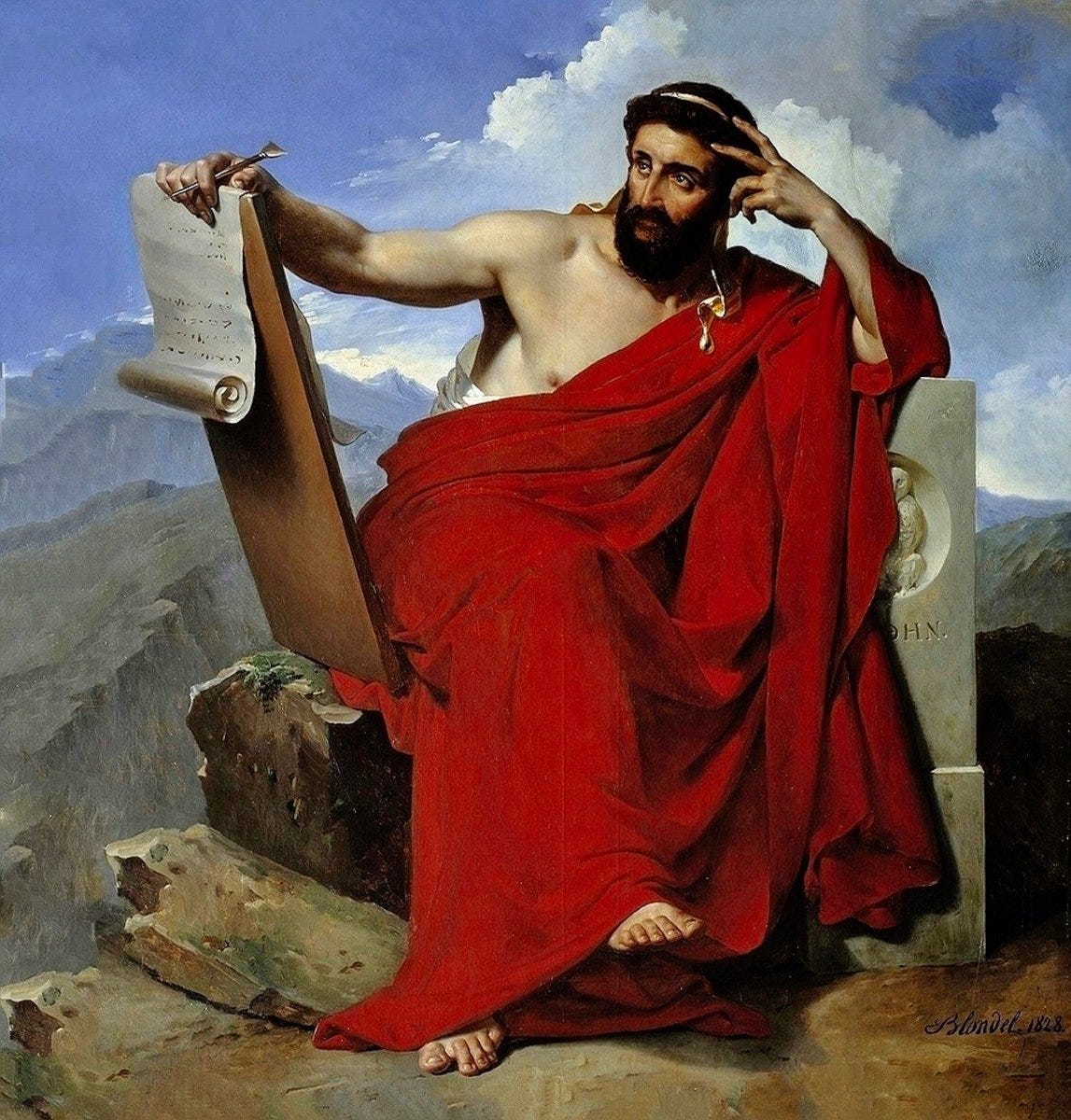

By the 6th century, Athens was on the verge of civil war. The laws had done little to diminish the growing gap between rich and poor. Due to a system of debt, in which poorer Athenians rented the land from the wealthy and, if their debts built up too high, the security of that debt was the person themselves, or their family. In effect, they were enslaved to the wealthy.
Solon was given full authority for a single year, during his time as an elected official (an archon), with which to re-write the laws and political system of Athens. Like any good politician, he was a beacon of hope for both rich and poor. His slogan was simple:
Equality breeds no strife
While we know he was a great writer, none of his writings really survive in full. We do have numerous quotes and paraphrases from other authors, often drawing from his poetry, which offer glimpses into his thoughts about the task at hand. So lets take a look at some of them! These all come from Plutarch’s Life of Solon, there are more quotes in other sources, but Plutarch offers the broadest range in a single work so is a great place to start.
Solon on trying to appease both rich and poor
Solon knew that he was stuck in the middle between two very juxtaposed groups - the haves and the have nots. The rich wanted their prestige and wealth to remain, but for the growing animosity and potential for violence to disappear; the poor wanted their freedom and a sense of fairness in how they were being dealt with. Among many of his reforms, Solon cancelled all debts, freeing the poor and liberating all enslaved Athenians in the process.
But he did not build a democracy. He created a system which still kept the rich at the top of the political pile (the poorest class could not hold every political office); and he did not redistribute the land or try to build anything close to equality. Chances are he knew that large scale changes, for either group, was going to result in conflict:
In matters of great importance, it is difficult to please everyone.
Solon on his reforms
It is always useful to look at any political and social reform through a series of lenses. Usually we look at it from the effects that it had on a society; looking at it in action and based on later changes that were implemented. But for Solon, we can also get a glimpse of his own perspective; what he thought he was trying to achieve.
In one fragment of his poetry, he tells us:
To the demos, I gave them as much power as they needed,
Neither degrading them, nor giving them too much.
While for those who had power and great wealth
I saw to it that they suffered no harm.
I stood with a mighty shield before both of them
And stopped either from prevailing unjustly.
Solon on demagogues and the manipulation of the people
When Solon completed his laws, he left Athens in a self imposed exile for 10 years, to let the laws settle and the people of Athens to learn how to navigate them. On his return, he must have been quite dismayed. The people were once again in turmoil and forming opposing factions, only for a tyrant to appear and take power - Pisistratus.
This was a situation he had been afraid could happen. He knew that the general population could be easily swayed by a clever speaker He commented that the people ‘hang on the words of crafty men’. How true he was.
After the demos (the citizens of Athens) voted on, and agreed, to give Pisistratus an armed bodyguard — which gave him the means to take power for his first period of tyranny (he would have 3 in total) — Solon was even more scathing:
Individually, each of you is as clever as a fox on the move,
But as a collective, you have an empty mind.
Concerns about Solon’s laws
Plutarch tells as a rather curious story where Solon was met by another of the great sages of the 6th century, Anacharsis of Scythia. The philosopher was travelling to Athens and soon befriended Solon. During a conversation about Solon’s plans for his written laws that, he believed, would bring fairness and justice to all Athenians, Anacharsis gave a rather astute observation that holds as much resonance now as it did 2,500 years ago. He laughed and compared the idea of using written laws to constrain the greed and injustice in Athens to creating a spider’s web:
[T]hey would hold the weak and delicate who might be caught in them, but they would be ripped apart by those with power and money.
Anacharsis is one of those figures who may or may not have been real, but the little we are told about him the more I wish we knew! He is said to have attended an Assembly meeting on the Pnyx, after which he claimed he was amazed to find that in Greece ‘the wise men do the talking, but it is the fools that make the decisions’.
Solon on allowing a tyranny
Pisistratus’ power grab must have been a real source of anger for Solon. His laws were effectively ignored because of a populist leader convincing the people that his rule was for the benefit of all.
Oddly enough, Pisistratus’ tyranny was not remembered with ill-feeling in ancient Athens, but for Solon we have a fragment of a poem where his anger was clearly placed at the feet of the people:
If you are now suffering as a result of your own cowardice,
Do not look to blame the wrath of the gods,
For it was you that increased his power and guard
And that is why you are now all sorry slaves.
Solon knew, better than anyone, that if power and authority is given to the people — and that power is truly in their hands — it becomes theirs to give away. In a robust democracy, individual power is not taken, it is given by the people and often with great enthusiasm.
So as elections come and go and democracy is continuously spouted as the legacy of ‘Western Civilisation’, it is useful to look back and see what the earliest democracies were really like. What problems they were trying to resolve and what problems they were continuing to face. Many of the observations are as relevant now as they ever were.